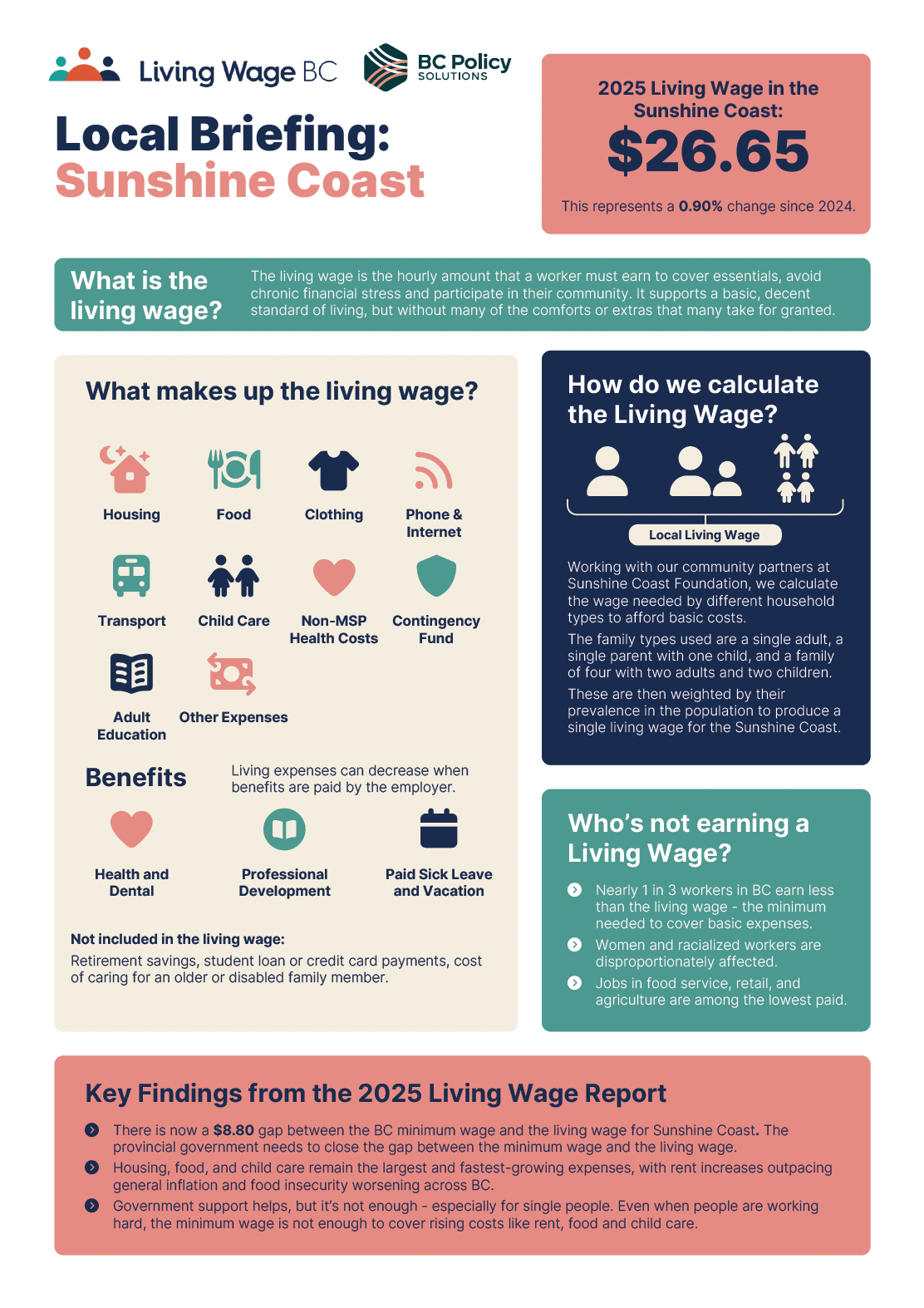
The living wage is the hourly rate that a full-time worker must earn to cover essential expenses, avoid chronic financial stress and participate in the social, civic and cultural life of their community. This rate supports a basic, decent standard of living, but without many of the comforts or extras that many may take for granted.
The living wage calculation is currently based on the weighted average of three household types: a two-parent family with two children, a single parent with one child, and a single adult living alone. The living wage varies across BC based on costs in each region.
A living wage does not cover additional expenses such as:
– Debt repayment from credit cards, loans or other interest payments
– Future savings for home ownership, retirement or children’s university education
– Anything beyond minimal recreation, entertainment and holiday costs
– Costs of caring for a disabled, seriously ill or elderly family member
What’s New?
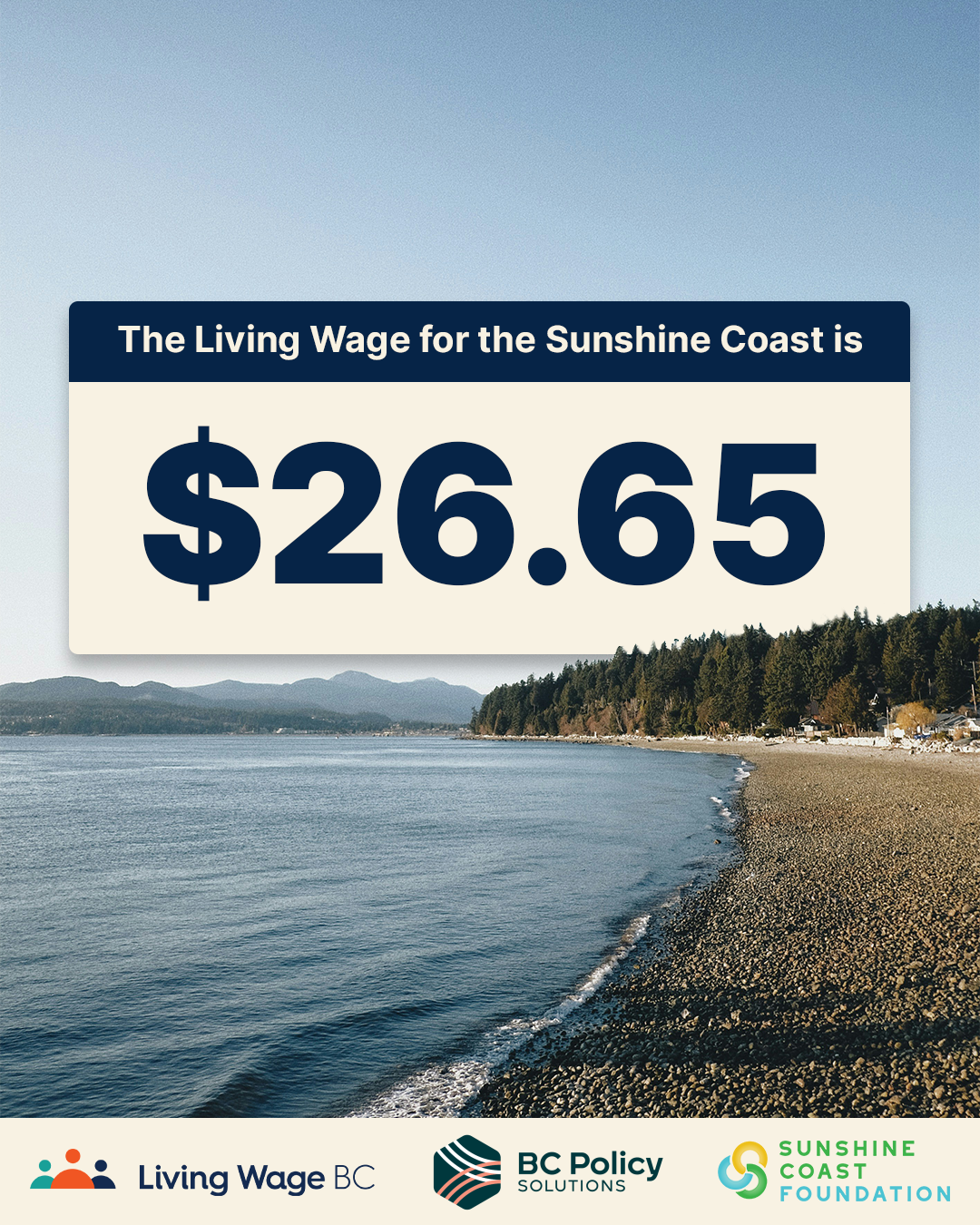
Working in conjunction with Living Wage BC and BC Policy Solutions the living wage on the Sunshine Coast is now estimated to be $26.65 per hour, which is a 0.9 per cent increase ($0.23) from 2024, the 2025 Living Wage Update report shows.
“The rising cost of living continues to put pressure on local families, especially when it comes to finding affordable housing and paying for groceries,” says Erin Storey, Executive Director of the Sunshine Coast Foundation. “The living wage helps shine a light on what it really takes to make ends meet in our community. It’s a reminder that when wages fall behind the cost of living, people who work hard every day can still struggle to afford the basics.”
For more information, read our full 2025 living wage update here.